Discover Custom Web Design Services

Discover Custom Website Design Services: Professional Solutions for Unique Digital Presence
In the digital age, a strong online presence is essential for businesses and individuals alike. Custom web design services offer tailored solutions that not only enhance visual appeal but also improve functionality and user experience. This article delves into the intricacies of custom web design, exploring its benefits, processes, and how it integrates with branding and digital marketing. Many businesses struggle with generic templates that fail to capture their unique identity. Custom web design addresses this issue by providing personalized solutions that resonate with target audiences. We will cover the definition of custom web design, its advantages over template solutions, the design process, and how to choose the right design company.
Indeed, the complexities of web projects often highlight the pitfalls of relying on generic templates and the critical need for a well-defined design process from the outset.
Web Project Design: Client Needs & Template Challenges
The nature of Web systems is substantially different from more conventional software systems. They are often developed very quickly from templated solutions, using coarse-grained authoring tools, and by the efforts of a multidisciplinary team. There is often considerable uncertainty on the part of the client as to their own requirements. The importance of defining the objectives of the system during the early stages of a project are generally acknowledged to be important, but access to the tools and templates can encourage developers to build too early.
Client needs and the design process in web projects, DB Lowe, 2002
What Are Custom Website Design Services and Why Choose Them?
Custom website design services involve creating unique websites tailored to the specific needs and goals of a business or individual. Unlike template-based designs, custom solutions are built from the ground up, allowing for greater flexibility and creativity. This approach ensures that the website not only reflects the brand’s identity but also provides an optimal user experience. Choosing custom design means investing in a digital presence that stands out in a crowded marketplace, ultimately leading to better engagement and conversion rates.
How Does Custom Web Design Enhance Brand Identity and User Experience?
Custom web design significantly enhances brand identity by incorporating unique visual elements that reflect a company’s values and mission. This tailored approach ensures that every aspect of the website, from color schemes to typography, aligns with the brand’s image. Additionally, custom designs prioritize user experience by focusing on intuitive navigation and responsive layouts. For instance, a well-designed e-commerce site can streamline the purchasing process, making it easier for customers to find and buy products. Successful brands often leverage custom web design to create memorable online experiences that foster loyalty and trust.
What Are the Benefits of Custom Design Over Template Solutions?
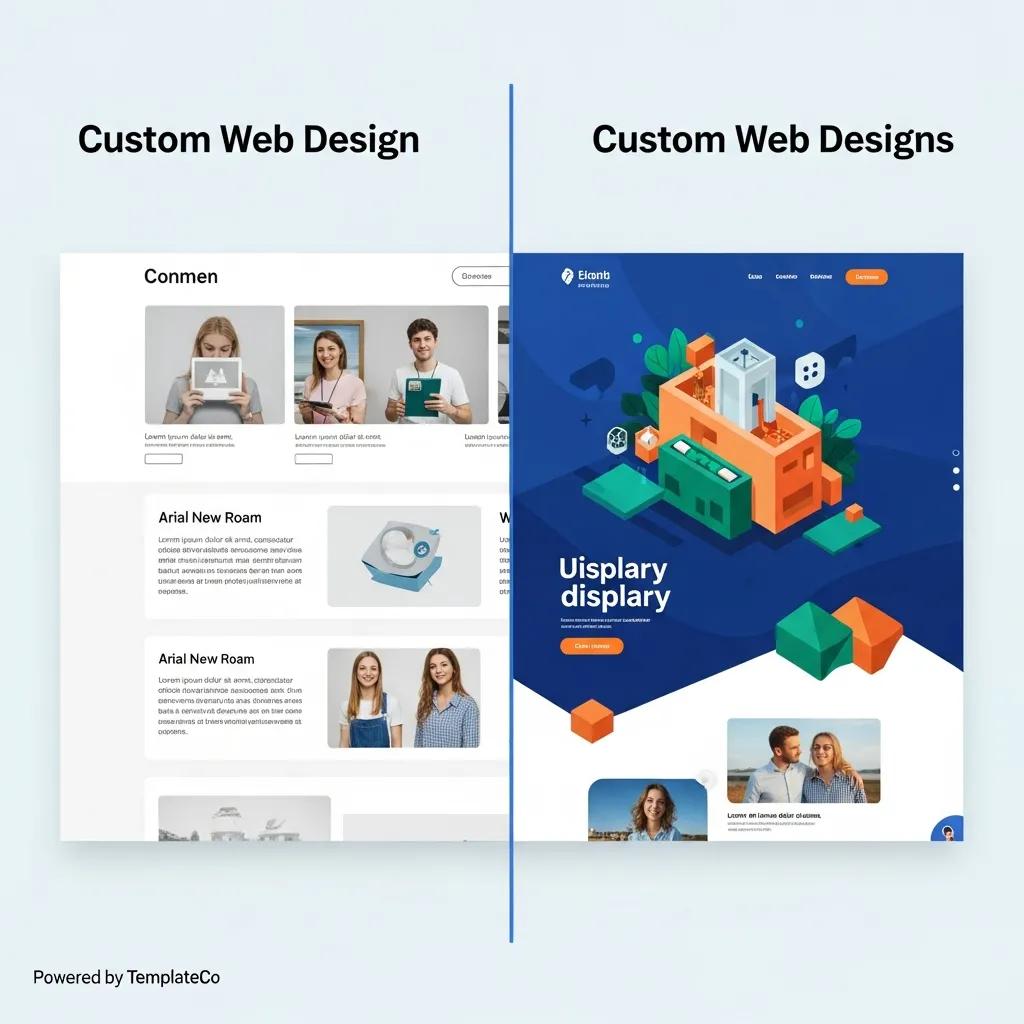
Custom design offers several advantages over template solutions, including:
- Flexibility: Custom designs can be tailored to meet specific business needs, allowing for unique features and functionalities.
- Uniqueness: A custom website stands out from competitors, providing a distinct identity that resonates with target audiences.
- Scalability: Custom solutions can evolve with the business, accommodating future growth and changes in technology.
For businesses looking to establish a strong online presence, these benefits make custom web design a worthwhile investment. Railhead Design specializes in creating custom web solutions that cater to the unique needs of each client, ensuring a professional and impactful digital presence.
How Does the Custom Web Design Process Work?
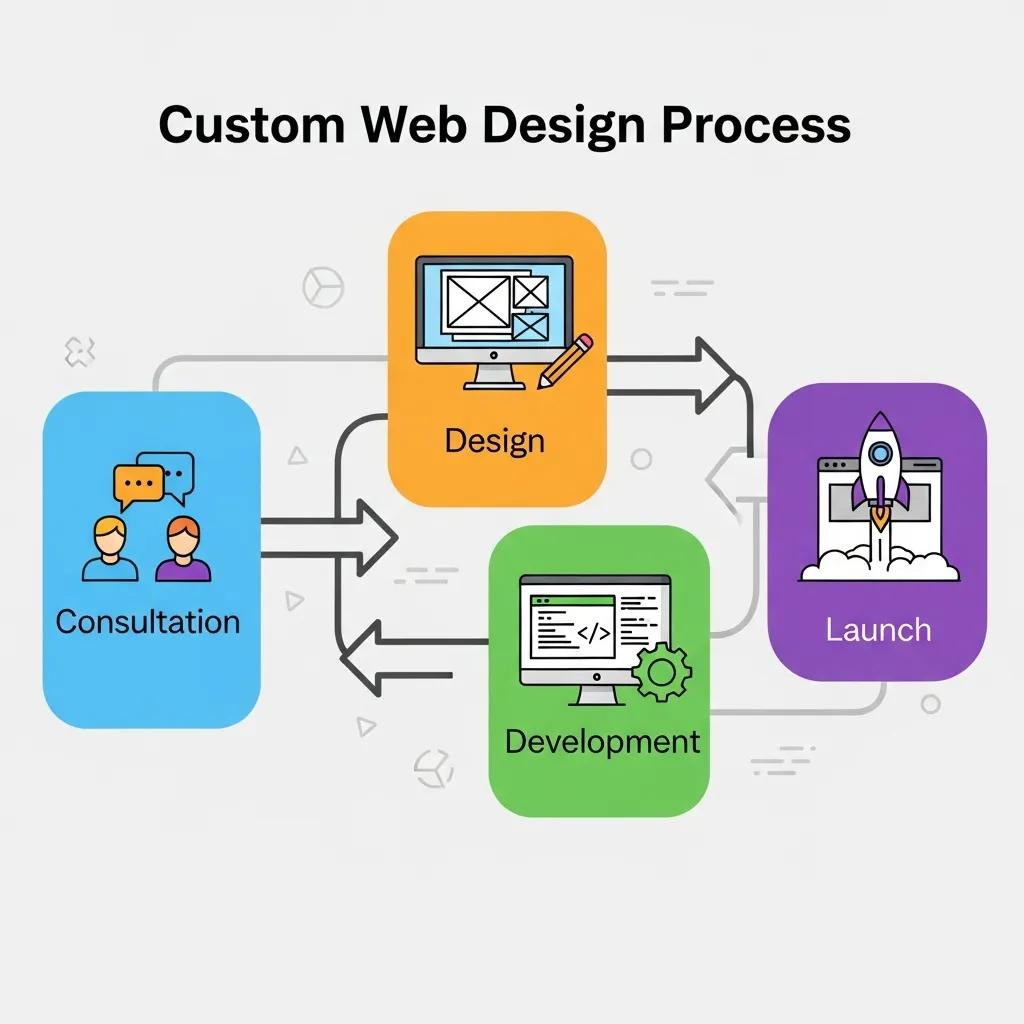
The custom web design process typically involves several key steps, ensuring that the final product aligns with the client’s vision and goals.
What Are the Key Steps: Consultation, Design, Development, and Launch?
- Consultation: This initial phase involves discussions between the client and the design team to understand the client’s needs, goals, and target audience.
- Design: Based on the consultation, designers create wireframes and mockups that outline the website’s layout and visual elements.
- Development: Once the design is approved, developers build the website, integrating necessary functionalities and ensuring responsiveness across devices.
- Launch: After thorough testing, the website is launched, making it accessible to users.
This structured approach ensures that every aspect of the website is carefully considered and executed, resulting in a high-quality final product.
How Is Responsive Design Integrated for Mobile Optimization?
Responsive design is a crucial component of modern web development, ensuring that websites function seamlessly across various devices. This approach involves using flexible layouts, images, and CSS media queries to adapt the website’s appearance based on the screen size. By prioritizing mobile optimization, businesses can enhance user experience and accessibility, catering to the growing number of users accessing websites via smartphones and tablets. A well-implemented responsive design not only improves usability but also positively impacts search engine rankings.
How Does Custom Web Design Integrate Branding and Digital Marketing?
Custom web design plays a vital role in integrating branding and digital marketing strategies. A well-designed website serves as a central hub for a brand’s online presence, reflecting its identity and values while also supporting marketing efforts.
What Role Does Branding Play in Website Design?
Branding is essential in website design as it establishes a cohesive identity that resonates with users. Elements such as logos, color schemes, and typography should be consistent across all platforms to reinforce brand recognition. A strong brand presence on a website can lead to increased trust and credibility, encouraging users to engage with the content and services offered.
How Are Marketing Insights Used to Improve Website Performance?
Marketing insights, derived from analytics and user feedback, are invaluable in enhancing website performance. By analyzing user behavior, businesses can identify areas for improvement, such as optimizing page load times or refining content strategies. Custom web design allows for the implementation of these insights, ensuring that the website evolves in response to user needs and market trends. This data-driven approach not only improves user experience but also boosts conversion rates.
What Are the Costs and ROI of Custom Website Design Services?
Understanding the financial aspects of custom web design is crucial for businesses considering this investment.
How Much Does Custom Web Design Typically Cost?
The cost of custom web design can vary significantly based on factors such as complexity, features, and the experience of the design team. Generally, businesses can expect to invest anywhere from $5,000 to $100,000 for a comprehensive custom website. This range reflects the diverse needs of different businesses, from simple informational sites to complex e-commerce platforms.
What Are the Measurable Benefits and Return on Investment?
The return on investment (ROI) for custom web design can be substantial. Businesses often see increased traffic, higher engagement rates, and improved conversion rates as a result of a well-designed website. For instance, companies that invest in custom design may experience a 25-30% increase in online sales within the first year. These measurable benefits highlight the value of investing in a tailored web solution that meets specific business goals.
Further emphasizing the tangible benefits, research highlights how custom design directly influences customer engagement and financial returns.
Custom Design Impact on Customer Experience & ROI
Generic design is invisible. You scroll past it, click away from it, forget it existed within seconds. Custom design stops you. It makes you feel something. And in a market where every competitor is one click away, that emotional response is the difference between a customer who buys and one who bounces. Businesses that invest in personalized design consistently see higher conversion rates, lower bounce rates, and stronger customer loyalty than those using off-the-shelf templates.
The Impact of Custom Designs on Customer Experience, G Tiwari, 2025
How to Choose the Right Professional Website Design Company?
Selecting the right web design company is crucial for ensuring a successful project outcome.
What Criteria Define a Reliable Custom Web Design Agency?
When evaluating potential design agencies, consider the following criteria:
- Experience and Expertise: Look for agencies with a proven track record in custom web design and a portfolio showcasing their work.
- Client-Centric Approach: A reliable agency should prioritize understanding your business needs and goals.
- Portfolio Quality: Review past projects to assess the agency’s design style and capabilities.
These factors can help businesses identify a design partner that aligns with their vision and objectives.
How to Evaluate Portfolios and Client Testimonials?
Evaluating an agency’s portfolio and client testimonials is essential in the selection process. Look for:
- Diversity of Projects: A varied portfolio indicates the agency’s ability to handle different styles and industries.
- Client Feedback: Positive testimonials can provide insights into the agency’s reliability and quality of work.
- Case Studies: Detailed case studies showcasing the agency’s problem-solving abilities and results achieved can be particularly informative.
By thoroughly assessing these elements, businesses can make informed decisions when choosing a web design partner.
What Are the Latest Trends in Custom Web Design Services?
Staying updated on the latest trends in web design is essential for businesses looking to maintain a competitive edge.
How Is AI-Driven Personalization Shaping Web Design?
AI-driven personalization is revolutionizing web design by enabling tailored user experiences based on individual preferences and behaviors. This technology allows websites to adapt content, layout, and recommendations in real-time, enhancing user engagement and satisfaction. As AI continues to evolve, its integration into web design will likely become more prevalent, offering businesses innovative ways to connect with their audiences.
This transformative trend is further supported by research exploring the methodologies and benefits of integrating AI for enhanced user satisfaction.
AI-Driven Personalized Web Interfaces for User Satisfaction
This research investigates AI-driven personalized web interface adaptation strategies and their impact on user satisfaction evaluation. The study addresses the growing need for intelligent interface customization in modern web applications by developing a comprehensive framework that integrates machine learning algorithms with real-time user behavior analysis. The proposed methodology combines user preference learning, dynamic interface element adaptation, and context-aware personalization algorithms to create more intuitive and efficient user experiences.
Research on AI-Driven Personalized Web Interface Adaptation Strategies and User Satisfaction Evaluation, Y Wang, 2024
Why Is Mobile-First and Responsive Design Essential Today?
Mobile-first design is crucial in today’s digital landscape, where a significant portion of web traffic comes from mobile devices. This approach prioritizes the mobile user experience, ensuring that websites are optimized for smaller screens before expanding to larger formats. Responsive design complements this strategy by providing a seamless experience across all devices. Implementing these design principles not only improves usability but also aligns with search engine optimization best practices, ultimately driving more traffic and conversions.